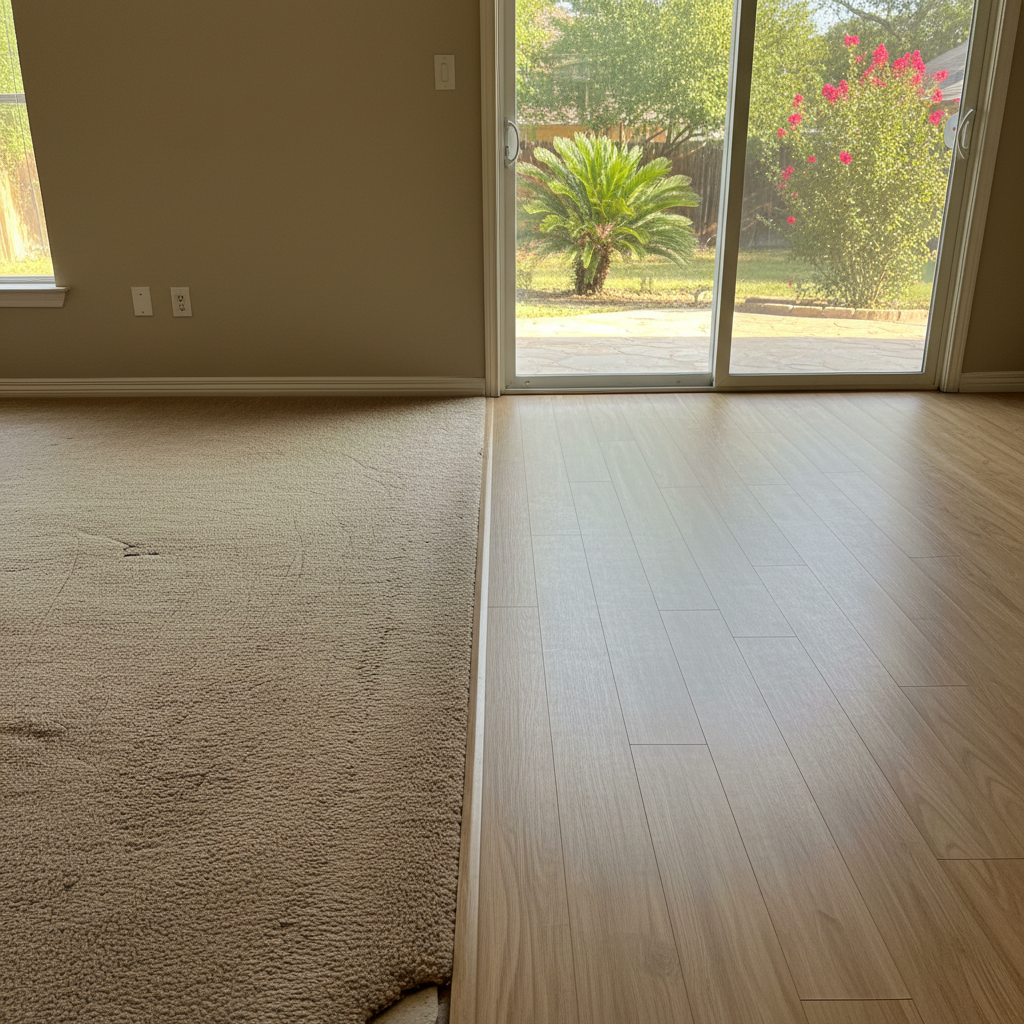
When walking into a home over in Alamo Heights, the edges of the floor can sometimes curl up. That is what happens when standard laminate meets Texas humidity and moisture. San Antonio Hardwood Floor Solutions sees it all the time. People try to save money upfront, but the climate in San Antonio does not forgive cheap shortcuts.
When looking at laminate flooring options for a house, homeowners basically have two main routes: traditional standard laminate and newer waterproof laminate. They look similar sitting on a showroom floor, but they behave differently once they are clicked into place in a real San Antonio home where the AC runs half the year and the humidity spikes after a heavy rain.
Standard Laminate: The Budget Option With Catch
Standard laminate has been around for many years. It uses a high-density fiberboard core with a photo layer on top and a wear layer protecting it. Upfront, standard laminate is cheap. When flipping a house or working on a low-traffic rental property downtown, standard laminate gets the job done.
- Lower initial material cost
- Feels firm underfoot
- Susceptible to swelling from standing water
- Edges can delaminate if pet bowls overflow
The problem with standard laminate is the core. Fiberboard acts like a sponge when it gets soaked. If someone spills a drink and you do not catch it immediately, or if a dog tracks in water from the backyard, that moisture slips into the seams. Once the core expands, it never shrinks back down. Homeowners are then looking at tearing out planks.
Waterproof Laminate: Built for Real Life
Waterproof laminate changed options for homeowners who want the look of wood without constant anxiety. Manufacturers use plastic-composite cores or heavily sealed locking systems that keep water from reaching that vulnerable fiberboard.
- Resists moisture and minor spills
- More stable under drastic temperature swings
- Slightly higher price tag
- Still requires smart cleaning habits
Waterproof laminate is resistant, not waterproof-forever-no-matter-what. If a water heater bursts, the floor is still in trouble. But for daily life—such as kids running inside with wet feet from the pool, muddy paws, and spilled drinks—waterproof laminate handles it without buckling.
Cost and Installation Realities
Standard laminate is cheaper per square foot. However, replacement costs down the road must be factored in. Putting standard laminate in a high-moisture area like a kitchen or a downstairs hallway near an exterior door means you will likely be replacing sections within five years.
Waterproof laminate costs more out of the gate. San Antonio Hardwood Floor Solutions always tells homeowners to look at the long game. Spending an extra dollar per square foot now saves you from tearing out warped planks later. Installation-wise, both standard laminate and waterproof laminate use click-lock systems that go down fast, but waterproof laminate often features tighter, waxed joints that block moisture better.
Appearance and Feel
Ten years ago, laminate looked fake. Today, embossing technology makes laminate tough to tell apart from actual hardwood. Both standard laminate and waterproof laminate options come in wide-plank styles with realistic wood grain textures. Underfoot, they feel similar, though waterproof laminate with a composite core has a denser, quieter feel when you walk across it in hard-soled shoes.
If you are living in your forever home around Stone Oak or Helotes, skip the standard laminate. Go with the waterproof laminate option and save yourself the headache. Your floors take a beating in the San Antonio climate, and they need all the help they can get.